German Kitchen Showroom in Uxbridge: The Complete Guide to Bespoke German Kitchens
If you’ve been searching for a German kitchen showroom in Uxbridge, you’ve probably already noticed something: most of the results aren’t actually in Uxbridge at all. That’s typical of this part of West London — genuine German kitchen specialists tend to be based in nearby hubs like Harrow, with a showroom large enough to display full working kitchens, rather than squeezed into a high street unit.
Kudos Interior Designs is one of those specialists. Our showroom is based in Harrow, a short drive from Uxbridge, Hillingdon, Ickenham and Cowley, and we’ve spent years designing and fitting German kitchens for homeowners across this part of West London. This guide covers everything you’d want to know before visiting a showroom or requesting a quotation — what a German kitchen actually is, why the category commands a premium, what it costs, how the process works, and the questions we get asked most often at the design stage.
What Is a German Kitchen?
A German kitchen is cabinetry manufactured in Germany to the tolerances and quality standards the German furniture industry is known for — typically referencing DIN and RAL-GZ 430 quality marks that govern everything from cabinet strength to hinge cycle testing. In practice, that means:
- Carcasses built from moisture-resistant board with precision-cut joints
- Soft-close hinges and runners rated for tens of thousands of open-close cycles
- Millimetre-accurate cabinet dimensions, so runs of units line up exactly
- Modular internal systems (drawer dividers, corner solutions, integrated lighting) engineered as standard rather than added on
The term is sometimes used loosely by suppliers selling UK-assembled units with “German-style” doors. A genuine German kitchen is manufactured by a German factory — brands such as Nobilia, Nolte, Häcker and Schüller are among the best known in the UK market — and shipped as a complete, engineered system.
Why Choose a German Kitchen Over a UK-Made Alternative?
Homeowners in Uxbridge usually come to us for one of three reasons: they’ve had a poor experience with a UK flat-pack kitchen before, they’ve seen a German kitchen in a friend’s home and noticed the difference in finish, or they’re renovating a period property and want something that will still look and function well in fifteen years.
Build quality. German factories manufacture at a scale and precision that’s difficult for smaller UK joineries to match on price. Doors, drawer fronts and carcasses are produced to consistent tolerances, so a kitchen ordered today will match a replacement panel ordered in five years’ time.
Storage engineering. German kitchen brands design internal storage as a core product feature, not an afterthought — pull-out larders, cutlery inserts, corner carousel units and integrated bins are all part of the standard planning process, not expensive add-ons.
Finish consistency. Matt lacquer, high-gloss and handleless finishes are colour-matched and quality-tested at the factory, which matters more than most buyers expect — mismatched sheen or colour between a door and a matching panel is one of the most common complaints with lower-tier suppliers.
Longevity. Soft-close mechanisms and hinges built to German industry cycle-testing standards typically outlast budget alternatives by a significant margin, which matters if you’re not planning to renovate again in five years.
Why Visit a Showroom Before You Buy?
Photographs and 3D renders are useful, but they don’t tell you how a worktop edge feels, how heavy a soft-close drawer is when fully loaded, or how a matt finish actually reads under kitchen lighting versus a screen. A showroom visit lets you:
- Open and close real cabinet doors and drawers to feel the mechanism quality
- Compare finishes side by side under proper lighting, not a phone screen
- See full kitchen displays rather than isolated door samples
- Sit down with a designer and sketch your own layout using your actual room dimensions
- Ask direct questions about lead times, pricing and installation before committing
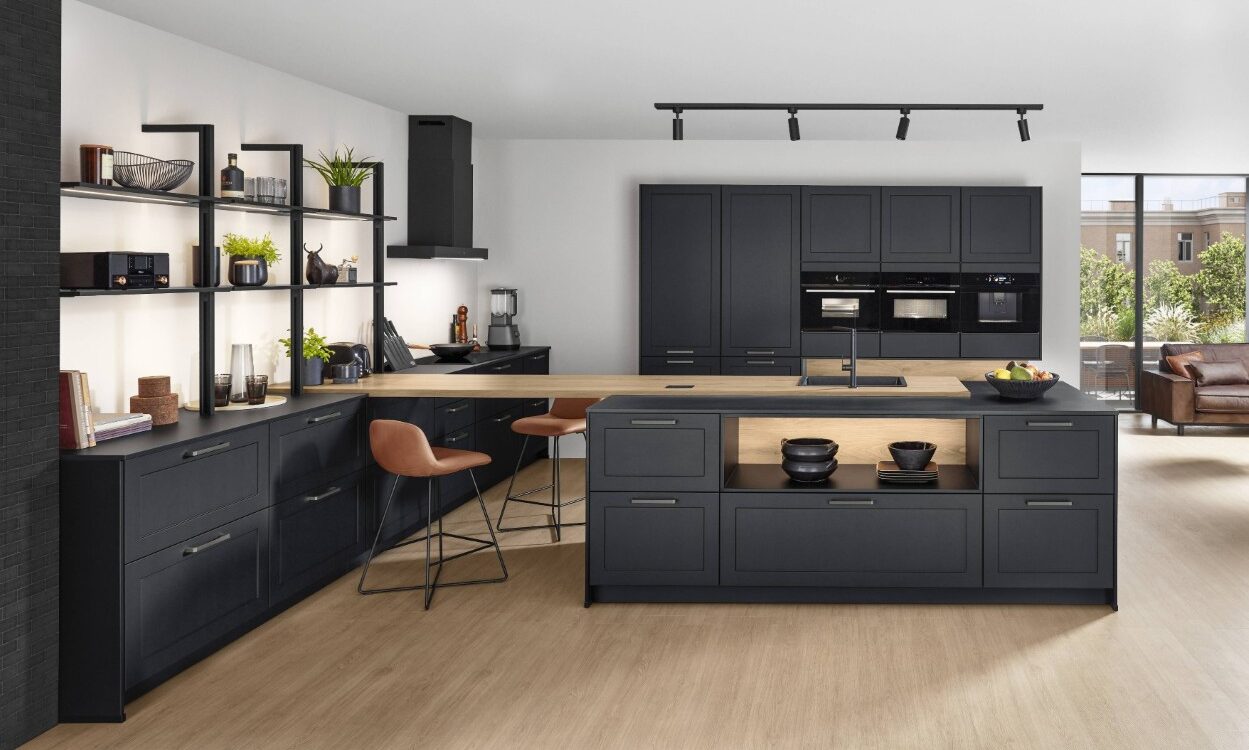
At our Harrow showroom, we deliberately keep multiple full kitchen displays running — from handleless contemporary layouts to warmer, more traditional designs — so Uxbridge customers can see the range in person rather than choosing from a brochure.
The Kitchen Design Process, Step by Step
- Free consultation. In showroom or at your Uxbridge home. We talk through how you use your kitchen, your budget, and any structural constraints.
- Survey and measure. A designer measures your space precisely, including services (plumbing, electrics, ventilation) that affect the layout.
- 3D design. You receive a full 3D visualisation of your kitchen before ordering anything, so you can see the finished result and request changes.
- Specification and quotation. Every cabinet, worktop, appliance and fitting is itemised, so pricing is transparent from the start.
- Manufacturing. Your kitchen is built in Germany to your exact specification — typically a 6–8 week lead time.
- Installation. Our in-house fitting team handles delivery, fitting, plumbing and electrical coordination, and a final snagging check before handover.
Planning and Layout Considerations
Kitchen layout matters more than finish choice for how well a kitchen actually works day to day. The main layouts we design for Uxbridge homes are:
| Layout | Best suited to | Key advantage |
|---|---|---|
| Galley | Narrow terraces, period conversions | Efficient use of tight footprints |
| L-shaped | Mid-size family kitchens | Good workflow, room for a dining area |
| U-shaped | Larger square rooms | Maximum storage and worktop space |
| Island / open-plan | Extensions, knock-throughs | Social cooking space, extra prep and storage |
Uxbridge’s housing stock — a mix of Victorian and Edwardian terraces near the town centre, 1930s semis toward Hillingdon and Cowley, and newer developments near the Grand Union Canal and Denham — means layout planning genuinely varies street to street. A designer who’s measured your specific room will always give you a better plan than a generic template.
Worktops and Materials
Worktop choice affects both budget and daily practicality:
- Quartz — engineered, non-porous, low maintenance, wide colour range. The most popular choice for busy family kitchens.
- Natural stone (granite, marble) — premium look, requires periodic sealing, marble is more porous and shows etching from acidic foods.
- Laminate — budget-friendly, huge design range, less heat and scratch-resistant than stone.
- Solid wood — warm aesthetic, needs regular oiling, best suited to lower-traffic areas.
We talk through worktop trade-offs honestly at the design stage rather than defaulting to the highest-margin option — quartz suits most households, but it isn’t automatically the right choice for every budget or use case.
Storage, Appliances and Lighting
Storage: pull-out larders, deep drawer systems, corner carousels and integrated bin units should be planned into the layout from the start — retrofitting good storage later is far more expensive than specifying it upfront.
Appliances: integrated appliances (ovens, induction hobs, extraction, fridge-freezers) are typically chosen alongside the cabinet plan so ventilation, power and clearances are correct from day one. We can specify appliances from most major integrated brands.
Lighting: under-cabinet LED strips, plinth lighting and internal cabinet lighting are now standard rather than optional extras on most German kitchen ranges, and make a noticeable difference to how usable a kitchen feels in the evening.
How Much Does a German Kitchen Cost?
German kitchens typically start from around £5,000 for a smaller, simpler layout, rising depending on kitchen size, cabinet finish, worktop material, and appliance specification. As a rough guide:
- Entry-level range: £5,000–£10,000 — smaller kitchens, laminate worktops, standard finishes
- Mid-range: £10,000–£20,000 — larger layouts, quartz worktops, integrated appliances
- Premium/bespoke: £20,000+ — handleless designs, natural stone, full island layouts, high-end appliance packages
The only reliable way to get an accurate figure for your own home is a proper measure and specification — generic price-per-metre figures rarely hold up once room shape, structural work and appliance choices are factored in. We provide itemised, transparent quotations with no hidden costs once fitting begins.
Common Mistakes to Avoid
- Choosing finish before layout. Get the layout and storage right first — finish is easier to adjust later in the process than a poor workflow.
- Underestimating storage needs. It’s far cheaper to add a pull-out larder at the planning stage than to retrofit one.
- Ignoring lead times. German manufacturing typically takes 6–8 weeks — factor this into any renovation timeline, especially around house moves.
- Skipping the showroom visit. Finishes and mechanisms genuinely feel different in person; relying on renders alone is the most common source of buyer’s remorse.
- Not asking about warranty and after-sales. Cabinet warranties and fitting guarantees vary significantly between suppliers — always ask before signing.
Kitchen Trends We’re Seeing in 2026
- Handleless designs continue to dominate contemporary requests, using push-to-open or integrated grip rail systems for a clean, minimal look.
- Two-tone cabinetry — a darker base with lighter wall units, or vice versa — remains popular for breaking up larger kitchen runs.
- Matt finishes are outpacing high-gloss for most new specifications, particularly in warmer, muted tones.
- Integrated, invisible appliances — hidden extraction, flush induction hobs, and appliance panels that match cabinet fronts — are increasingly requested in premium specifications.
- Sustainable manufacturing — German factories have generally led on board sourcing and energy-efficient production, which is increasingly a factor buyers ask about directly.
Warranty, Maintenance and After-Sales
A genuine German kitchen should come with a manufacturer’s warranty on cabinetry (commonly multi-year, sometimes longer on specific ranges) alongside a separate fitting guarantee from your installer. Day-to-day maintenance is straightforward: wipe finishes with a soft cloth and non-abrasive cleaner, avoid excessive standing water on worktop joins, and have soft-close mechanisms checked if they start to feel loose. Ask any supplier directly what’s covered, for how long, and who to contact if an issue arises after installation — this is a fair question and a reputable showroom will answer it clearly.
Why Choose Kudos Interior Designs
We’re a Harrow-based German kitchen showroom serving Uxbridge, Hillingdon, Ickenham, Cowley and the surrounding West London area. What sets us apart for local homeowners:
- Genuine German-manufactured cabinetry, not UK-assembled imitations
- Free 3D design visualisation before you commit to anything
- Transparent, itemised pricing — no surprise costs once fitting starts
- An in-house fitting team, so the people who design your kitchen also oversee installation
- A showroom with multiple full working displays, not just door samples
FAQ Section
What is a German kitchen? A German kitchen is cabinetry manufactured in Germany to strict industry quality standards, known for precise tolerances, durable soft-close mechanisms, and engineered storage systems built in as standard.
Are German kitchens worth the money? For most households, yes — the build quality, hinge/mechanism longevity, and storage engineering typically outlast cheaper alternatives, meaning lower replacement and repair costs over time.
Which German kitchen brands are best? Nobilia, Nolte, Häcker and Schüller are among the most established and widely specified brands in the UK market, each with different strengths in style range and price point.
How much does a German kitchen cost? Prices typically start around £5,000 for a smaller layout and rise with size, finish and appliance specification — most mid-range family kitchens fall between £10,000 and £20,000.
Why visit a showroom instead of ordering from a brochure? Finish, mechanism quality and scale are difficult to judge from photos alone. A showroom visit lets you test drawers, compare finishes under real lighting, and discuss your actual room with a designer.
Can I customise my kitchen layout and finishes? Yes — German kitchen ranges are highly configurable, from cabinet dimensions and internal storage to door finish, colour and handle style, all planned around your specific room.
How long does installation take? Manufacturing typically takes 6–8 weeks after final design sign-off, with on-site fitting usually completed within 1–2 weeks depending on kitchen size and any structural work.
Do German kitchens last longer than UK-made kitchens? Generally yes, largely due to stricter manufacturing tolerances and higher-cycle-rated hinges and runners, though correct installation and reasonable maintenance also play a significant role.
What worktop material is best for a family kitchen? Quartz is the most popular choice for busy households — non-porous, low maintenance and durable — though natural stone and solid wood suit specific aesthetics and lower-traffic kitchens well.
Why choose Kudos Interior Designs for a kitchen in Uxbridge? We combine genuine German-manufactured cabinetry with free 3D design, transparent pricing, and an in-house fitting team, from a showroom a short drive from Uxbridge in Harrow.